
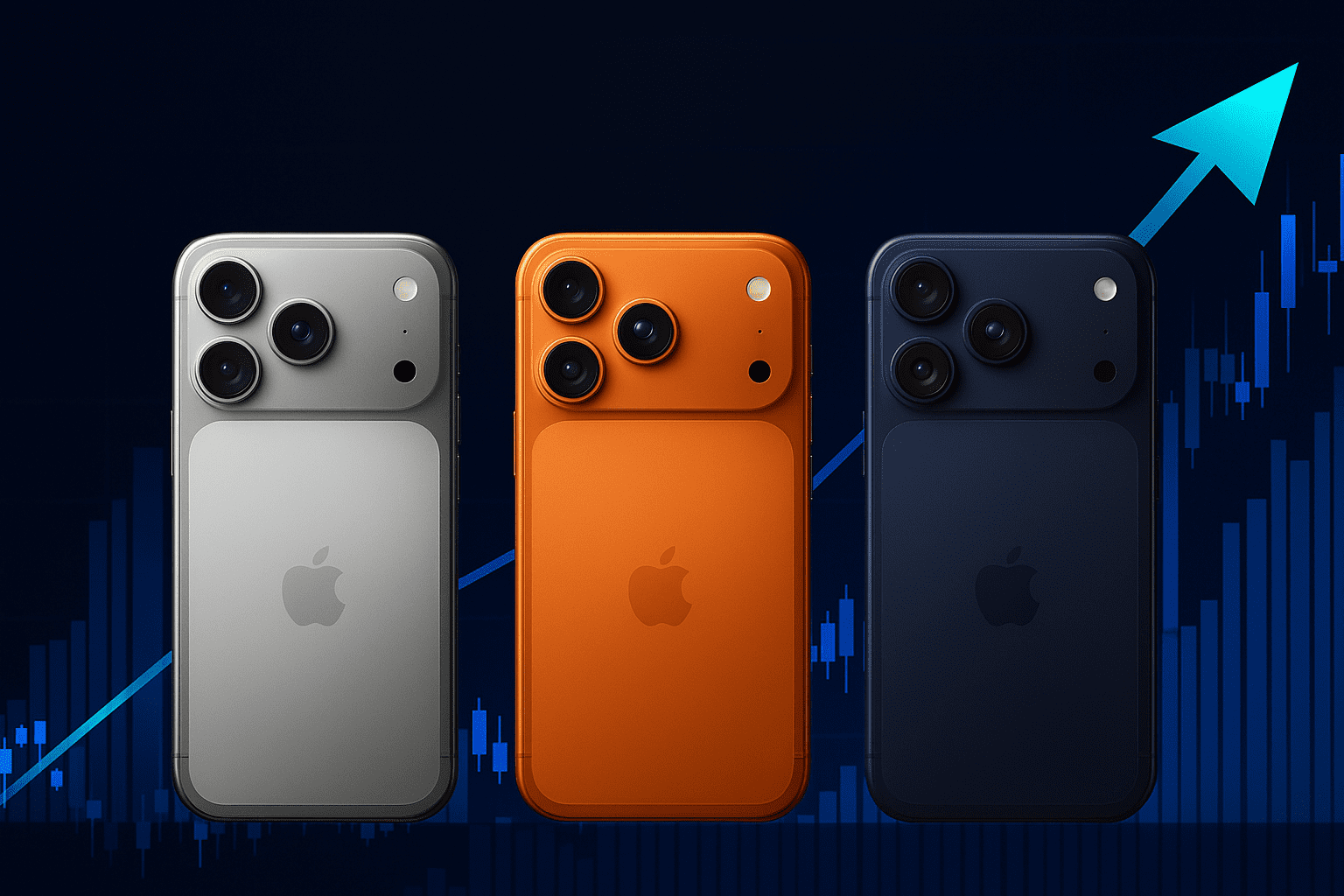
It’s been a little while since Apple unveiled the iPhone 17 lineup, and the initial frenzy has started to settle. In our earlier coverage, we outlined the key features of the iPhone 17 Pro Max and how it represented Apple’s biggest upgrade in years.
Market Impact and Stock Reaction
The days surrounding the launch showed how closely Apple’s stock performance is tied to its flagship iPhone. Immediately after the unveiling event, the stock dipped slightly as some investors worried about pricing and whether the phone’s upgrades would be enough to drive demand.
However, once preorders opened and the first sales data came in, sentiment quickly changed. Reports of long queues, strong demand in US, and faster-than-expected sell-outs of the Pro Max model gave Apple’s shares a significant boost. The stock rallied roughly 3% on launch day, briefly touching a new yearly high and regaining much of its earlier losses.
Analysts have since revised their expectations upward. Some now predict that iPhone shipments could surpass 200 million units in the next year, driven by higher upgrade rates and strong demand for the Pro Max in particular. Early preorder figures from key markets suggest that consumer interest is indeed stronger than for the iPhone 16 series.
Consumer Frenzy at Launch
When the iPhone 17 lineup finally hit shelves, Apple Stores across major cities saw long queues and packed showrooms. Reports from New York, London, and Dubai described crowds lining up before doors opened — a scene reminiscent of past Apple product debuts. This surge of foot traffic not only signaled strong consumer excitement but also reassured investors that demand for the new models, especially the iPhone 17 Pro Max, was holding firm despite earlier skepticism.

Final Thoughts
Despite its familiar exterior, the iPhone 17 Pro Max represents Apple’s biggest leap in years. A reengineered chip, improved cameras, and much longer battery life make it a meaningful upgrade. More importantly, the early signs of strong demand have already translated into a positive shift in Apple’s stock performance.
If these trends continue, the iPhone 17 Pro Max could drive Apple’s largest sales growth in recent memory. Investors are watching closely, and it’s clear that the new iPhone isn’t just a product launch — it’s a potential turning point for Apple’s momentum in both technology and the stock market.
Launch queues versus what models actually weight
Photos of lines in Toronto, Seoul, and London make compelling television, but sell-side models emphasize Pro Max mix, storage tier uptake, and carrier trade-in subsidies more than door counts. A promo that inflates weekend activations can depress near-term average selling price without changing unit headlines—read channel-check footnotes, not only lifestyle shots.
Analysts also model foreign exchange, China demand commentary, and component cost guidance on the call; those lines moved the stock more than launch B-roll in several recent generations.
Services margin and capital return still frame the multiple
Hardware cycles swing sentiment, yet services gross margin expansion and buyback cadence often explain year-over-year EPS trajectories as much as a single September Sunday. Investors holding multi-year positions watch installed base growth, paid subscriptions per user, and enterprise pipeline mentions—not whether your local mall had a tent.
Pre-event run-ups sometimes mean-revert after guidance if buy-side expectations overshoot available supply—crowds do not guarantee beats.
Supply signals from lead times and color SKUs
Pro color lead times stretching past three weeks can indicate camera or display bottlenecks. Air SKUs clearing faster may signal promo-driven mix shift rather than organic demand strength. Pre-order shipping estimates are among the earliest hard data on mix; they update daily while pundits argue from anecdotes.
Accessory attach at pickup—cases, MagSafe wallets, AirPods bundles—feeds margin models updated the Monday after launch weekend.
Carrier promos and ASP math
Bill credits spread over thirty-six months change the consumer price story without showing up in Apple's recognized revenue the same quarter. Compare total cost of ownership when carriers push Air upgrades over Pro tiers. Enterprise DEP shipments lag consumer queues; B2B volume smooths spikes but shifts revenue recognition timing.
What short-term traders watch differently
Options markets around product events price implied volatility into the print. Retail enthusiasm can coexist with hedge funds fading the news once details look in-line. Social sentiment spikes are noisy; channel inventory draws are slower but steadier.
Long-term holders and quality-of-earnings
Watch whether management reiterates gross margin bands, comments on AI infrastructure spend, and updates capital allocation priorities. Launch day stock moves often reverse within a week if guidance is conservative and supply is constrained—fundamentals outlast ribbon-cutting.
If you own the stock for services transformation, one launch weekend is a data point, not the thesis.
Reading sell-side notes without the hype
When banks publish post-launch notes, compare implied Pro mix assumptions to your own store checks. A bullish note that assumes eighty-percent Pro Max attach on day one may embed fantasy. Conversely, a bearish note that ignores services acceleration may miss why holders stay positioned through soft hardware quarters. Cross-check two independent research shops before trading on a single headline tied to queue photos.
Dividend and buyback context
Apple's capital return program still absorbs a meaningful slice of daily volume. Launch-week equity moves that ignore ongoing repurchase pace can overstate how much new iPhone news alone re-rated the stock.
Options market context
Short-dated call volume spikes around iPhone events—retail investors chasing same-week gains often confuse implied volatility crush with fundamental rejection of the product cycle.
Index rebalancing effects
Passive index funds rebalance on float changes unrelated to launch queues—short-term price moves may reflect flows, not fundamentals.
Channel inventory signals
Carriers reporting elevated trade-in volumes may signal mix shift toward promos rather than organic demand strength—compare walk-in traffic anecdotes to activation data in earnings footnotes.
Analyst day events often move guidance more than launch weekend foot traffic—watch calendar, not only store photos.